MANHATTAN NEIGHBORHOOD GUIDE
East Village Apartments for Sale
Walk-up co-ops, boutique condos and a limited group of elevator and doorman buildings.
By Anthony Guerriero, Manhattan Miami Real Estate | Updated August 2026
The East Village is a street-by-street market. Stuyvesant Street, Tompkins Square Park, Alphabet City, the Bowery edge and the busiest restaurant corridors produce very different living conditions within a compact area. A quiet rear exposure can matter more than a fashionable cross street.
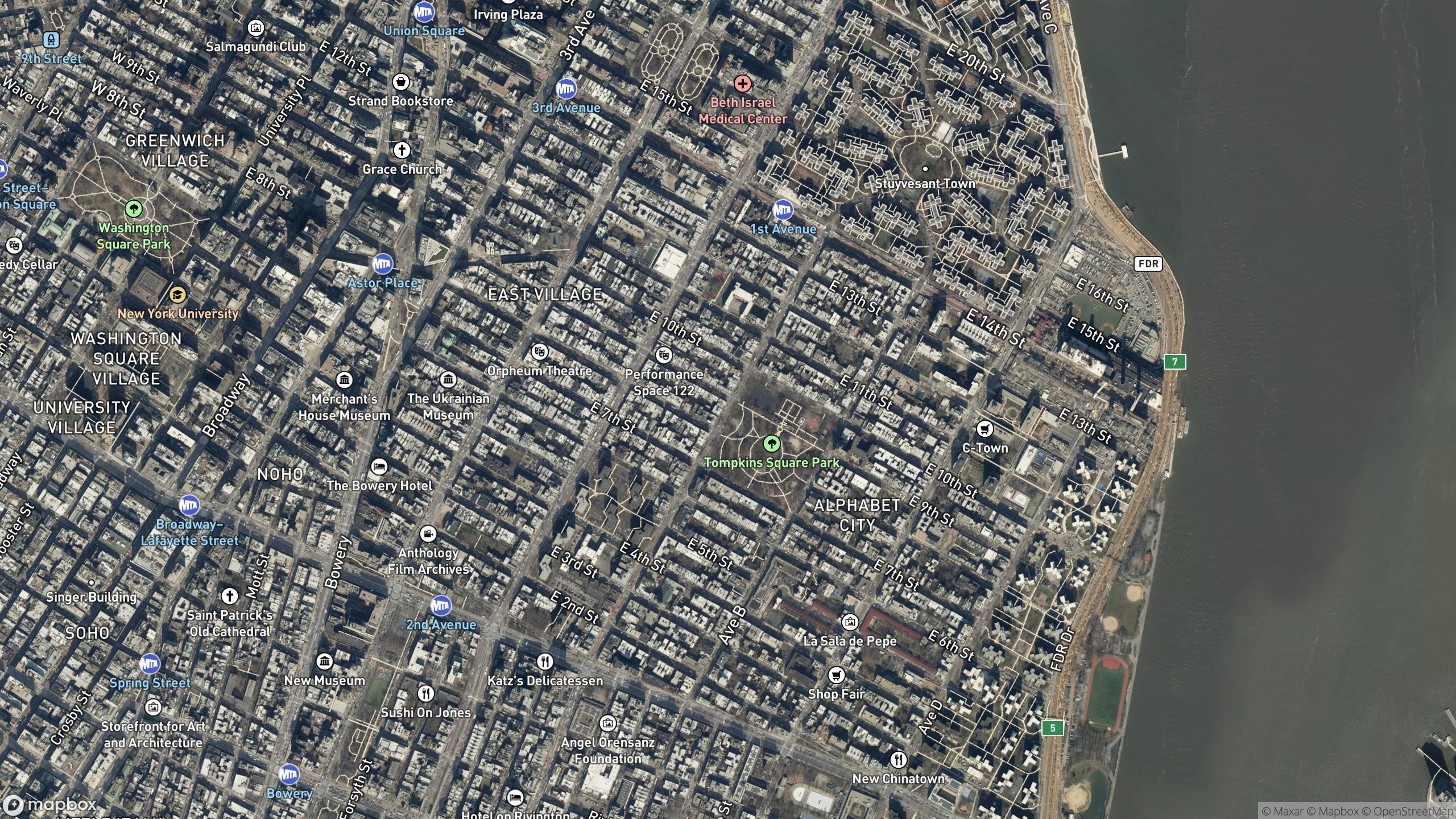
East Village Real Estate Map
The East Village runs from East Houston to East 14th Street, between the Bowery / Fourth Avenue and the FDR Drive along the East River.
CURRENT INVENTORY
East Village properties for sale
The listing view is limited to this neighborhood and for-sale inventory. It does not expose a broad site search.
Availability changes frequently. Listing status, boundaries, building rules and property details must be independently confirmed.
East Village at a Glance
East Village Market Overview
Inventory. The East Village is a fragmented, building-specific market. Most of the stock is walk-up co-op and boutique condo, with a smaller layer of full-service new development and a residual townhouse layer on the more residential blocks. Pricing shifts meaningfully between walk-up and elevator buildings, between renovated and unrenovated units, and between blocks closer to Tompkins Square Park, Astor Place, and the East River edge.
Co-ops vs condos. The East Village skews co-op heavier than newer downtown submarkets. Co-op buildings typically carry lower asking prices but require board approval, financial review, and tighter ownership rules, including limits on subletting, pied-à-terre use, and foreign ownership. Condos are scarcer but offer the flexibility most international and investor buyers require.
Lifestyle premium. Demand here is lifestyle-driven rather than purely investment-driven. Buyers choose the East Village for restaurant and nightlife density, downtown culture, Tompkins Square Park, and proximity to NoHo, Greenwich Village, and the Lower East Side. That lifestyle premium is real but uneven, blocks with active nightlife trade differently than quieter Stuyvesant Street or Tompkins Square-adjacent inventory.
New development. A small number of newer full-service condominiums, Steiner East Village among them, have introduced amenitized, elevator-served inventory at higher price points. These buildings appeal to buyers who want downtown lifestyle without walk-up conditions or co-op governance.
Townhouses. The East Village retains a meaningful townhouse layer on its more residential blocks, particularly East 7th through 10th Streets and Stuyvesant Street. Townhouse pricing is heavily condition- and width-dependent, and inventory is thin enough that comparable analysis often requires looking across adjacent neighborhoods.
Building-by-building diligence. East Village pricing is not uniform. Buyers should compare ownership type, building reserves, board rules where applicable, monthly carrying costs, walk-up vs elevator service, renovation quality, and rental flexibility, not only price per square foot.
Price Ranges by Property Type
| Property Type | Typical Price Range |
|---|---|
| Studios | $500,000-$900,000 |
| 1-Bedroom | $700,000-$1.5M |
| 2-Bedroom | $1.2M-$3M |
| 3-Bedroom | $2M-$5M |
| Townhouses | $4M-$12M+ |
Pricing varies materially by ownership type (co-op vs condo), walk-up vs elevator, renovation quality, floor level, outdoor space, and proximity to Tompkins Square Park or Astor Place.
Notable East Village Buildings
| Building | Address | Profile |
|---|---|---|
| Steiner East Village | 438 E 12th St | Full-service new development condo |
| 100 Avenue A | 100 Avenue A | Boutique condo, Tompkins Square views |
| Christodora House | 143 Avenue B | Landmark prewar conversion co-op |
| 35 Cooper Square | 35 Cooper Square | Contemporary boutique on Bowery edge |
| 445 Lafayette Street | 445 Lafayette St | Boutique conversion near Astor Place |
| The Ageloff Towers | 141 E 3rd St | Art Deco landmark co-op |
| The Jefferson | 211 E 13th St | Converted loft building |
| Townhouse stock | E 7th, 10th Streets, Stuyvesant Street | Single-family ownership on the more residential blocks |
East Village Lifestyle & Character
Restaurant and nightlife density. The East Village is one of Manhattan’s most concentrated restaurant and bar corridors, with the highest density along St. Marks Place, Avenue A, First Avenue, and the Bowery edge. Buyers prioritizing downtown nightlife and dining accept measurable evening noise on the most active blocks; quieter streets sit a short walk away.
Tompkins Square Park anchor. Tompkins Square Park is the neighborhood’s outdoor anchor and a meaningful pricing input for inventory on the surrounding blocks. Park-frontage and park-view inventory typically commands a premium over interior-block units of comparable specification.
Residential pockets. The East 7th through 10th Street blocks, Stuyvesant Street, and parts of Alphabet City retain a quieter residential character with townhouse stock and lower commercial density. These pockets attract buyers who want East Village proximity without the most active nightlife exposure.
Walk-up versus elevator. A significant share of East Village inventory is walk-up. Elevator and full-service buildings exist but are concentrated in a smaller subset of newer condominiums and select prewar conversions. Walk-up status materially affects pricing, rentability, and long-term resale.
Subway and downtown access. The F at Second Avenue, L at First and Third Avenues, 6 at Astor Place, and J/Z at Bowery serve the neighborhood. Access to NoHo, Greenwich Village, the Lower East Side, and Union Square is short, supporting the East Village’s position as a downtown lifestyle hub rather than a destination for transit-dependent commuters to Midtown.
East Village vs Adjacent Markets
The East Village sits between several distinct downtown submarkets. Buyers comparing the East Village usually weigh it against three or four neighboring areas with overlapping but very different price points and ownership profiles.
East Village vs West Village
The West Village is more residential, more polished, and materially more expensive, with townhouse-heavy stock and a tighter, more walkable village character. The East Village is grittier, more nightlife- and restaurant-driven, with broader entry points and a more flexible co-op stock for buyers prioritizing downtown character over polish.
East Village vs Lower East Side
The LES has more newer-construction condo and conversion inventory along Orchard, Ludlow, and Norfolk, with a similar lifestyle profile. The East Village leans more toward walk-up co-ops, prewar conversions, and Alphabet City character, with comparable nightlife but less luxury condo depth.
East Village vs Gramercy
Gramercy is quieter, more co-op-heavy, and skews to full-service prewar buildings with stricter ownership rules. The East Village is more vertical in pricing range, more lifestyle-driven, and offers a meaningfully lower entry point for downtown buyers willing to accept walk-up or boutique conditions.
East Village vs NoHo
NoHo is smaller, loft-heavy, and centered on cast-iron conversions with very limited inventory and a higher price floor. The East Village offers more variety, more walk-up co-ops, more boutique condos, and a broader range of price points across a much larger footprint.
East Village Apartments for Sale
Browse current East Village apartments for sale below. The inventory is concentrated across walk-up co-ops, boutique condos, and a small set of newer full-service developments, where building type, monthly carrying costs, and ownership rules can vary significantly within the same neighborhood.
BUILDING-BY-BUILDING BUYER GUIDE
East Village condos and doorman buildings
Condominiums and full-service buildings are a smaller part of the market than walk-ups and elevator co-ops. Buyers seeking flexible ownership, a doorman or newer systems should compare a limited building set rather than broaden into NoHo or the Lower East Side.
East Village co-ops and walk-up apartments
A walk-up may offer character or a lower basis, but the true flight count, package handling, bicycle and stroller storage, renovation history and board rules influence long-term use and resale.
Quiet East Village apartments
Quieter homes are often found on side streets or with rear exposures away from nightlife and avenue traffic. Floor height, window quality, bedroom orientation, retail below and future construction should be checked apartment by apartment.
Buildings to compare
| Building | Buyer fit and diligence |
|---|---|
| Steiner East Village | Full-service condominium; compare line, service and carrying costs |
| 75 First Avenue | Newer condominium on an active avenue; evaluate sound and exposure |
| Christodora House | Recognized prewar condominium on Tompkins Square Park |
| The Ageloff | Established prewar co-op with distinctive courtyard scale |
| Village Green | Modern condominium; compare exact address and block character |
BUYER QUESTIONS
East Village real estate FAQ
Are there condos for sale in the East Village?
Yes, but condos are a smaller share of inventory than walk-up and elevator co-ops.
Where are quieter East Village apartments?
Side streets and rear exposures can be quieter, but sound, floor height and nearby commercial use must be checked at the exact apartment.
Should I buy an East Village walk-up or elevator apartment?
Compare accessibility, space, monthly cost, storage, package handling, board rules and likely resale audience.
Is Alphabet City part of the East Village?
Alphabet City is generally treated as the eastern part of the East Village, but exact address and avenue exposure still matter.
PRIVATE BUYER REPRESENTATION
Request a building-specific East Village shortlist
Tell us your budget, timing, intended use and preferred property type. We will compare the relevant public market with private opportunities where available, then flag carrying costs, rules and address-specific risk.
Begin private advisory+1 646 376 8752