Explore Manhattan luxury condos or Billionaires' Row apartments for sale →
Manhattan has thousands of luxury residential towers and co-ops. But only a handful become landmarks, buildings that set pricing records, attract global collectors, and remain culturally relevant decades after delivery.
We've been selling luxury real estate in Manhattan and Miami for over 15 years. Here's what we've learned: New York has always had iconic residential buildings. Miami is just now discovering what that means.
The difference is 140 years of architectural precedent.
The Buildings That Defined Generations
New York's iconic residential architecture didn't start with Billionaires' Row or Central Park Tower. It started in 1884.
The Dakota changed what an apartment building could be. Henry Hardenbergh's German Renaissance masterpiece on Central Park West established that residential architecture could be as significant as civic monuments. When it opened, skeptics called it "so far west it might as well be in the Dakota Territory." Today, it's one of the most recognizable buildings in the world.
The San Remo and The Eldorado defined Central Park West's skyline in the 1930s. Emery Roth's twin-towered Art Deco masterpieces created a silhouette that remains instantly recognizable almost a century later. These weren't just apartment buildings. They were architectural statements.
The Plaza brought Beaux-Arts grandeur to residential living in 1907. When it converted to private residences in 2008, it proved that historical and architectural pedigree creates permanent value.
Then, in 2008, something shifted.
15 Central Park West proved that contemporary architecture could achieve the same cultural weight as pre-war classics, if the architect understood what made those buildings timeless. Robert A.M. Stern's limestone tower didn't try to be innovative for innovation's sake. It connected to pre-war elegance while being completely modern. The building attracted buyers who understood architecture, not just luxury.
View current listings at 15 Central Park West →
That's when I realized: architectural significance drives value more than any other factor in Manhattan's luxury market.
The Supertall Revolution: Billionaires' Row
Between 2014 and 2021, Manhattan's skyline changed forever.
One57 (Christian de Portzamparc, 2014) launched Billionaires' Row as a residential district. A Pritzker Prize winner's first NYC residential tower, it established that supertalls could work as luxury residential, not just commercial.
View current listings at One57 →
432 Park Avenue (Rafael Viñoly, 2015) became the most divisive icon in Manhattan. That 1,396-foot rigid geometric form sparked global architectural discourse. Some loved it. Some hated it. But everyone recognized it instantly, and that's what separates iconic from generic.
View current listings at 432 Park Avenue →
56 Leonard (Herzog & de Meuron, 2016) brought sculptural innovation to Tribeca. The "Jenga Tower" with cantilevered boxes created unique outdoor terraces on every floor through engineering. Buyers understood owning Herzog & de Meuron's only residential tower in New York carried the same cultural weight as their Tate Modern or Beijing National Stadium.
View current listings at 56 Leonard →
111 West 57th Street (SHoP Architects, 2021) achieved the slenderest ratio globally at 1:24. Terra cotta and bronze at 1,428 feet. This is architectural ambition at the highest level.
Central Park Tower (Adrian Smith + Gordon Gill, 2021) claimed the height record at 1,550 feet, tallest residential building in the Western Hemisphere. The architects of Burj Khalifa don't just show up anywhere. Buyers knew they were purchasing engineering excellence with architectural significance.
View current listings at Central Park Tower →
220 Central Park South (Robert A.M. Stern, 2019) set the pricing record. When the $238 million penthouse sold, it wasn't just about size or views. It was about owning the pinnacle of Stern's residential work.
View current listings at 220 Central Park South →
What I Learned Selling These Buildings
I've closed transactions at 15 Central Park West, 53 West 53rd Street, 56 Leonard, 220 Central Park South, and Central Park Tower. Here's what separates these buildings from standard luxury:
15 Central Park West buyers weren't choosing it for amenities (though the private dining and screening rooms are excellent). They chose it because Stern's limestone design feels like it's been there forever while being completely modern. The building attracts buyers who understand architecture, not just luxury.
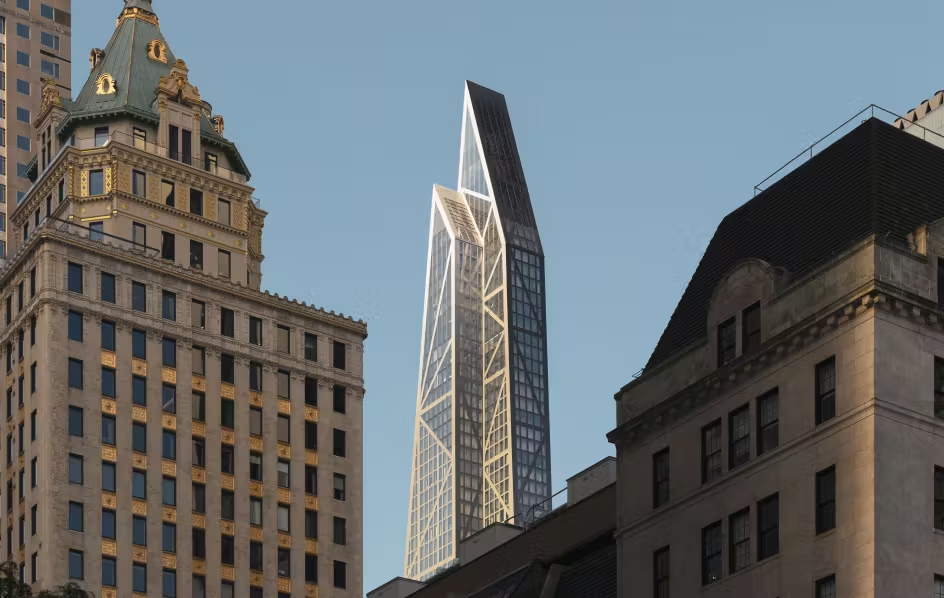
53 West 53rd Street buyers want the cultural connection. Jean Nouvel's diagrid tower isn't just adjacent to MoMA, it's architecturally embedded in it. These buyers view the building as part of their cultural identity, not just their address.
56 Leonard buyers appreciate structural innovation as art. Herzog & de Meuron's cantilevered design creates unique terraces on every floor through engineering. These buyers seek Pritzker Prize-winning architecture that solves spatial problems, not decoration.
220 Central Park South buyers understand they're buying into Stern's architectural legacy. The record-breaking penthouse sale proved architectural significance creates value beyond square footage.
Central Park Tower buyers seek the height record and Adrian Smith's pedigree. They know his work globally. The buyers understand they're purchasing engineering excellence with architectural significance.
The pattern: architectural significance drives these purchases, not amenity lists or square footage calculations.
The Buildings Beyond Billionaires' Row
Manhattan's iconic residential architecture extends far beyond Central Park South.
520 West 28th Street (Zaha Hadid, 2017) gave Manhattan its only Zaha Hadid residential building. That curved steel exoskeleton adjacent to the High Line is instantly recognizable. Hadid's only NYC residential tower. That scarcity matters.
One High Line (Bjarke Ingels Group, 2023-2024) brought BIG's sculptural approach to West Chelsea. The curved form integrated with the High Line demonstrates how contemporary architecture responds to urban context.
The Flatiron Building (Daniel Burnham, 1902) is converting to 38 residences. Burnham's Beaux-Arts solution to a triangular lot created instant recognition that hasn't faded in over 120 years. When this conversion completes in 2026, it will prove again that timeless architecture outlasts trends.
Manhattan's Future Icons
The pattern continues with Manhattan's next generation of starchitect buildings:
80 Clarkson has exterior architecture and floor plans by COOKFOX Architects, with residential interiors and amenities by The Office of Thierry W Despont. Its two limestone towers rise from a shared podium at the meeting point of the West Village and Hudson Square.
625 Madison Avenue (Foster + Partners, 2030) - Norman Foster's 1,200-foot tower. The first new residential on Madison Avenue's prime corridor in decades. Foster's global recognition brings immediate credibility.
655 Madison Avenue (Kohn Pedersen Fox, 2031) - KPF's 1,162-foot supertall adding a new height record to the Upper East Side skyline.
77 West 66th Street (Architect TBA, 2030+) - A 1,200-foot tower steps from Lincoln Center and Central Park. Would become the tallest building on the Upper West Side, transforming that neighborhood's skyline.
800 Fifth Avenue (Robert A.M. Stern, 2027-2028) - This is the most significant.
Robert A.M. Stern's third major Manhattan residential project after defining modern luxury with 15 Central Park West (2008) and setting the global pricing record with 220 Central Park South ($238M penthouse, 2019).
Only 33 residences on prime Fifth Avenue, the first major new condo on Fifth in decades. We believe 800 Fifth Avenue will eclipse 220 Central Park South's record and become Manhattan's most expensive residential building once completed.
See the complete guide to NYC's iconic residential buildings →
Why Starchitect Buildings Trade Differently
After closing transactions at Manhattan's most significant buildings and expanding to Miami, I've identified what creates lasting value:
Pritzker Prize-Winning Architects or Recognized Starchitects
Not just "good architects." Architects whose work is studied, debated, and collected globally. Robert A.M. Stern. Herzog & de Meuron. Adrian Smith + Gordon Gill. Jean Nouvel. Zaha Hadid. Tadao Ando.
When buyers in Hong Kong, London, or São Paulo recognize the architect's name without Googling it, that's a starchitect.
The Building Establishes a New Category
15 Central Park West redefined modern luxury by connecting to pre-war elegance. 432 Park Avenue established rigid minimalism at supertall scale. 56 Leonard brought structural innovation as sculptural art. Each created a new category, not just another luxury building.
Instant Visual Recognition
Close your eyes and picture 432 Park Avenue's grid. 56 Leonard's cantilevered boxes. 111 West 57th Street's slender form. Central Park Tower's height.
You can see them, right? That's what separates iconic from generic.
The Building Ages Gracefully
The Dakota is 140 years old and more valuable than ever. The San Remo is approaching 100 years and still commands premium pricing. Timeless architecture outlasts trends, that's why Stern's work from 2008 still feels current while so many contemporaries already look dated.
Cultural Significance Beyond Real Estate
These buildings appear in films, architecture publications, and global media. They attract celebrity buyers. They become part of New York's identity.
When someone says "I live at 15 Central Park West" or "220 Central Park South," it carries cultural weight beyond the address.
Pre-War vs. Starchitect: Different Value Propositions
Clients often ask: should I buy a pre-war classic or a modern starchitect building?
Pre-War Classics (The Dakota, San Remo, Eldorado):
- 100+ years of proven value
- Historical and architectural significance
- Classic layouts and details
- Co-op boards and regulations
- Limited modern amenities
Modern Starchitect Buildings (15 CPW, 220 CPS, 56 Leonard, Central Park Tower):
- Contemporary architecture by globally recognized architects
- Modern systems and amenities
- Condo ownership (typically)
- Floor-to-ceiling glass and views
- Architectural innovation
Both create lasting value, but through different mechanisms. Pre-war buildings have proven it over a century. Starchitect buildings are proving it now.
How Manhattan's Pattern is Emerging in Miami
Here's what makes our multi-market perspective valuable:
New York has 140+ years of iconic residential architecture. Miami never had this, until recently.
Then three buildings changed Miami's market:
- Faena House (Norman Foster, 2016)
- One Thousand Museum (Zaha Hadid, 2019)
- Eighty Seven Park (Renzo Piano, 2019)
Miami now has starchitect buildings trading with the same velocity patterns we see in Manhattan. One Thousand Museum commands significant premiums over comparable downtown luxury, just like 220 Central Park South or 15 Central Park West.
The same principles that create value at Manhattan's starchitect buildings now apply in Miami:
- Architectural pedigree creates pricing premiums
- Global recognition attracts international buyers
- Limited supply by definition creates scarcity
- Cultural significance provides value beyond square footage
We understand this because we've watched it happen in Manhattan over decades, and we're watching it happen in Miami now.
See how this pattern emerged in Miami →
Robert A.M. Stern's Manhattan Trilogy
No architect has shaped Manhattan's modern luxury market more than Robert A.M. Stern.
15 Central Park West (2008) - Redefined what contemporary luxury could be by connecting to pre-war elegance. Set velocity and pricing records that proved architectural significance matters more than amenities.
220 Central Park South (2019) - Achieved the highest residential sale in U.S. history at $238 million. Stern's limestone masterpiece on Central Park South established him as the architect who creates lasting value.
800 Fifth Avenue (2027-2028) - Only 33 residences on Fifth Avenue. Positioned to eclipse 220 Central Park South's record and become Manhattan's most expensive building.
Three buildings. Three different decades. One architect who understands what makes buildings timeless.
Pre-Construction vs. Established Icons: The Trade-Off
Should you buy an established icon or a pre-construction opportunity like 800 Fifth Avenue?
Established Icons (15 CPW, 220 CPS, 56 Leonard, Central Park Tower):
- Immediate possession
- Proven resale track record
- You experience the architecture now
- Higher entry price (premium already established)
Pre-Construction Icons (800 Fifth Avenue, 80 Clarkson):
- Customization opportunities
- Entry at pre-appreciation pricing
- Multi-year wait for completion
- Risk: unproven until delivery
I watched buyers pass on 56 Leonard and 220 Central Park South during construction because they seemed expensive or risky. Today, those same buyers can't find inventory at any price.
The opportunity is in recognizing the pattern early.
How to Evaluate a Future Icon
Not every pre-construction building with a famous architect becomes iconic. Three indicators I look for:
1. Architect Pedigree - Has this architect delivered icons before?
Robert A.M. Stern created 15 Central Park West and 220 Central Park South, two of Manhattan's most successful buildings. 800 Fifth Avenue is his third major residential project. That track record matters.
COOKFOX designed 80 Clarkson. Tadao Ando's first New York building is 152 Elizabeth Street in Nolita, a separate project developed by Sumaida + Khurana.
2. Developer Track Record - Have they proven they can execute at this level?
The developers behind successful starchitect buildings in Manhattan have proven they understand how to deliver architectural vision without compromising quality. Look for developers with track records at iconic buildings, not just generic luxury.
3. Genuine Scarcity - Is the positioning truly unreplicable?
800 Fifth Avenue: First major new condo on Fifth Avenue in decades. Only 33 residences. That's unreplicable scarcity.
80 Clarkson has two towers with stepped terraces and gardens. Buyers seeking a Tadao Ando residence in New York can look at 152 Elizabeth Street, which has seven residences.
If a building checks all three, it has genuine iconic potential beyond marketing hype.
Why This Matters for Buyers and Sellers
If you're buying:
Standard luxury depreciates. Iconic architecture appreciates.
When you buy 220 Central Park South or 15 Central Park West, you're not just buying square footage. You're buying Stern's architectural legacy. When you buy 56 Leonard, you're buying Herzog & de Meuron's only NYC residential tower.
That scarcity creates permanent value.
If you're selling:
If you own a starchitect building, you're selling to a different buyer pool than standard luxury. Your competition isn't "comparable condos in the neighborhood", it's other architecturally significant buildings globally.
We position these properties differently. The buyers who paid record prices at 220 Central Park South are the same buyers looking at One Thousand Museum in Miami or seeking pre-construction opportunities at 800 Fifth Avenue.
Our Multi-Market Perspective
Selling luxury real estate in both Manhattan and Miami gives us unique insight into how iconic buildings behave across different markets.
We've watched how starchitect buildings trade in New York over years, not months. We understand what creates lasting value versus temporary trends.
Now we're watching the same patterns emerge in Miami with Faena House, One Thousand Museum, and Eighty Seven Park. The principles are consistent:
- Architectural pedigree creates pricing premiums and velocity advantages
- Global recognition attracts international buyers who specifically target these buildings
- Limited supply by definition creates scarcity
- Cultural significance provides value beyond square footage and amenities
Whether you're evaluating an established icon like 15 Central Park West, a pre-construction opportunity like 800 Fifth Avenue, or exploring Miami's emerging starchitect market, we can walk you through exactly how these buildings operate differently from standard luxury inventory.
Explore NYC's complete guide to iconic residential buildings →
See how this pattern emerged in Miami →
Manhattan Miami Real Estate LLC
Licensed in New York, Florida & California
Contact us to discuss iconic building opportunities in Manhattan and Miami.