
-2.png?width=500&height=205&name=MIAMI%20HOME%20SEARCH%20(2)-2.png "MIAMI HOME SEARCH (2)-2")




NoHo, which stands for “North of Houston,” is a small but busy neighborhood that has stunning architecture, trendy shops, and chic restaurants right North of SoHo. In the late 1800s, NoHo was mostly a manufacturing district. But by the 1950s, most of the manufacturers had moved to other parts of the city, and they began renting their spaces to artists and theater groups. Today, many artists live in NoHo’s large lofts, and there are still many performing art spaces in the neighborhood. NoHo may only be six blocks wide, but every one of those blocks is filled with unique attractions that make this neighborhood one of the most sought after in Downtown Manhattan.
By Anthony Guerriero, Manhattan Miami Real Estate | Updated August 2026
NoHo NYC at a Glance
- Name: NoHo means North of Houston Street.
- Location: A compact Downtown Manhattan district generally centered between Houston Street and Astor Place, from Broadway toward the Bowery.
- Housing: Landmark cast-iron lofts, converted commercial buildings, boutique condominiums and a very limited number of townhouses.
- Buyer profile: Buyers seeking large loft proportions, architectural character and immediate access to Greenwich Village, SoHo, Nolita and the East Village.
- Inventory: Supply is structurally limited, so asking prices and available layouts can vary sharply from one building to the next.
What Is NoHo NYC Known For?
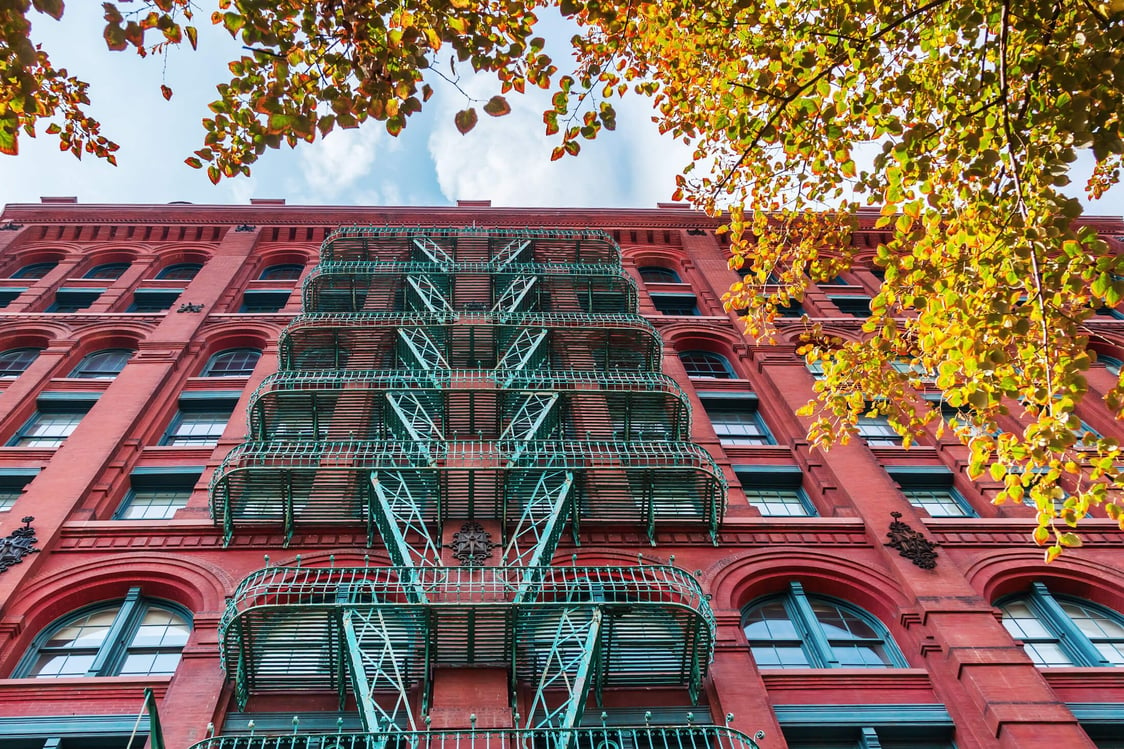
NoHo is one of Manhattan's smallest and most architecturally distinctive downtown neighborhoods. Its identity comes from nineteenth-century cast-iron and masonry commercial buildings later converted into expansive loft residences, together with a small group of design-led luxury condominiums. The NoHo Historic District protects much of this streetscape, helping preserve the neighborhood's scale and visual character.
The neighborhood sits at a useful downtown crossroads. Greenwich Village is to the west, the East Village begins to the east, SoHo lies south of Houston Street, and Nolita is a short walk southeast. Broadway, Lafayette Street, the Bowery and Astor Place put multiple subway lines, restaurants, cultural institutions and shopping within a compact radius.
NoHo Real Estate and Apartments
NoHo real estate is defined by scarcity rather than large development volume. Many homes are loft conversions with high ceilings, oversized windows, broad entertaining rooms and layouts that can differ substantially even within the same building. Newer condominiums tend to be small, architecturally ambitious projects with full-service amenities and few residences.
Buyers should compare more than headline price per square foot. Ceiling height, natural light, protected views, elevator access, renovation quality, monthly carrying costs, landmark restrictions and the legal configuration of bedrooms or mezzanines can materially affect value. Review current active inventory alongside recent closed sales, because a small number of unusual transactions can distort neighborhood averages.
Browse current NoHo apartments for sale, including available lofts and condominiums, or review our guide to buying an apartment in NYC.
NoHo Apartments for Sale
Browse current NoHo apartments, lofts and condominiums for sale. Because this is a small, supply-constrained district, the public market may contain only a few homes at a time. Building-specific and off-market opportunities require a separate review.
NoHo vs. SoHo, Nolita and Greenwich Village
These adjacent downtown neighborhoods share walkability and historic architecture, but their housing stock and day-to-day character differ. Buyers should compare the specific building and block rather than treating the areas as interchangeable.
NoHo vs. SoHo
NoHo is smaller and generally quieter, with fewer available homes. SoHo apartments offer a broader cast-iron loft market and a larger retail district south of Houston Street.
NoHo vs. Nolita
Nolita has a finer-grained residential and restaurant streetscape, while NoHo is more closely identified with large-format loft conversions and architect-led Bond Street condominiums.
NoHo vs. Greenwich Village
Greenwich Village has more varied co-op, townhouse and condominium inventory. NoHo provides a narrower selection centered on loft scale, privacy and architectural scarcity.
NoHo boundaries and buildings
NoHo Real Estate Map
NoHo runs north from East Houston Street toward Astor Place, between Broadway and the Bowery. Explore its compact boundary and several defining condominium and loft buildings.
Why Listing Portals Show More Homes Than Fit Inside NoHo
NoHo is only a few blocks wide, but real estate portals do not all use the same boundary. Some MLS records use a broader NoHo subdivision that reaches edge addresses along Bleecker Street, East 4th Street, Broadway or Astor Place. Other listings are marketed as NoHo because the name is more recognizable than the property's technical submarket.
How to use the listings on this page: the live Lofty feed uses its dedicated “Noho, Manhattan, NY” for-sale subdivision. Use the map above to compare each address with the compact neighborhood boundary, then evaluate the individual building. A portal label should not replace address-level diligence.
NoHo Condo and Loft Building Comparison
NoHo's value is building-specific. These addresses illustrate the district's range from nineteenth-century conversions to architect-designed boutique condominiums.
| Building | Residential profile | What buyers should examine |
|---|---|---|
| 40 Bond Street | Herzog & de Meuron boutique condominium with highly distinctive architecture. | Residence position, privacy, outdoor space, service level and the premium attached to scarce resales. |
| 25 Bond Street | Full-floor and large-format luxury loft condominium designed by BKSK. | Floor-specific light, elevator privacy, renovation quality and monthly carrying costs. |
| 10 Bond Street | Small Selldorf Architects condominium with contemporary downtown layouts. | Exposure, terrace utility, sponsor-era documents and the building's limited resale sample. |
| 48 Bond Street | Contemporary boutique condominium associated with Deborah Berke's design. | Layout efficiency, ceiling height, facade exposure and comparable sales within the building. |
| 40 Bleecker Street | Newer boutique condominium within the NoHo Historic District. | View protection, service costs, tax profile, amenities and differences between lines. |
| 36 Bleecker, The Schumacher | Landmark printing-house conversion with restored masonry and loft-scale interiors. | Window line, historic fabric, renovation approvals, reserves and facade obligations. |
| 22 Bond Street | Low-density contemporary residential building on Bond Street. | Full-floor configuration, operating history, privacy and the scarcity premium versus nearby conversions. |
| 41 Bond Street | Boutique condominium conversion in the neighborhood's architectural core. | Legal configuration, light, elevator access, building financials and resale liquidity. |
NoHo Prices and Market Conditions
NoHo does not produce enough uniform sales for a single neighborhood median to tell the whole story. One period may contain a renovated full-floor loft or Bond Street penthouse; another may contain only smaller edge-of-neighborhood apartments. Either result can move the reported average sharply without representing a broad change in value.
Start with the building
Compare sales in the same condominium or conversion first. Building reputation, service model, reserves and resale history can matter as much as square footage.
Adjust for the residence
Ceiling height, window scale, protected light, elevator access, outdoor space, legal bedroom count and renovation quality drive large differences between lofts.
Underwrite ownership costs
Review common charges, taxes, insurance, reserve funding, facade cycles and likely capital projects. A lower asking price can be offset by greater building risk.
For this reason, buyers should use live asking inventory as a starting point and recent closed sales as evidence, not treat an automated portal estimate as a valuation. A credible offer analysis should separate true NoHo addresses from broader MLS labels and explain every material adjustment.
Buying in NoHo: What to Check
In a converted loft building, confirm the certificate of occupancy, bedroom legality, window and facade obligations, freight-elevator rules, renovation history and any landmark approvals. In a newer condominium, compare sponsor history, reserve funding, amenity costs, tax abatements and the resale record. For either property type, examine lot-line windows and nearby development rights when long-term light and view protection matter.
NoHo NYC FAQ
What does NoHo stand for?
NoHo means North of Houston Street. The name distinguishes the neighborhood from SoHo, which means South of Houston Street.
Where is NoHo in Manhattan?
NoHo is a compact Downtown Manhattan neighborhood centered north of Houston Street around Lafayette Street, Bond Street, Bleecker Street and the Bowery, extending toward Astor Place.
What types of apartments are found in NoHo?
Buyers will find converted cast-iron lofts, prewar co-ops, boutique luxury condominiums and a limited number of townhouses. Large loft layouts are a defining feature of the neighborhood.
Is NoHo the same as Nolita?
No. NoHo lies north of Houston Street, while Nolita is generally south of Houston and east of SoHo. They are adjacent but have different architecture and housing stock.
How many blocks is NoHo?
NoHo is one of Manhattan's smallest named neighborhoods, generally described as a compact district of roughly six to ten blocks depending on the boundary convention. The historic district and real estate portal boundaries are not identical.
Why do real estate websites show so many NoHo listings?
MLS and portal neighborhood labels often include edge addresses beyond the compact historic core. Check the street address against the map and evaluate whether the property is inside NoHo, on its boundary or in an adjacent market.
Living in NoHo
NoHo combines landmark architecture with immediate access to several downtown neighborhoods. Its compact footprint makes the experience unusually block-specific: Bond Street feels residential and design-focused, Lafayette Street carries more movement, and the Bowery marks a sharper transition toward the East Village.
Architecture, culture and daily life
The Public Theater, Astor Place and Cooper Union anchor the neighborhood's northern edge. The Merchant's House Museum preserves a rare nineteenth-century domestic interior just east of Lafayette Street, while the NoHo Historic District protects much of the cast-iron and masonry streetscape.
Residents can walk to Washington Square Park, SoHo, Nolita and the East Village within minutes. The tradeoff is that quiet can change by block: buyers should visit a property during daytime, evening and weekend periods and consider nearby restaurants, loading activity and nightlife.
Location and transportation
Getting to NoHo
Use the Google map for directions and nearby destinations. The Mapbox map above is the better reference for the neighborhood boundary and residential buildings.
- 6 train: Astor Place and Bleecker Street
- B, D, F and M: Broadway-Lafayette Street
- R and W: 8th Street-NYU
- Nearby: Washington Square Park, SoHo, Nolita and the East Village
Private buyer representation
Evaluate the building, not only the listing
Request a private review of active and off-market NoHo opportunities, recent comparable sales, carrying costs, building financials and landmark-related diligence.
NoHo buyer guide
NoHo Apartments: Meaning, Inventory and Nearby Neighborhoods
NoHo means North of Houston Street. In real estate searches, the name usually signals a compact downtown market with scarce supply, cast-iron and loft architecture, boutique condominiums and a strong premium for exact address.
NoHo vs SoHo
SoHo is larger and more retail-driven, with deeper cast-iron loft inventory. NoHo is smaller, quieter and often more building-specific, especially around Bond Street, Bleecker Street and Lafayette Street.
NoHo vs Nolita
Nolita sits south of Houston and east of SoHo, with a more intimate boutique-condo and walk-up market. NoHo generally has larger loft associations and a stronger historic-district identity.
NoHo vs Greenwich Village
Greenwich Village offers more classic prewar co-ops and townhouses. NoHo is more concentrated around loft conversions and boutique downtown condominiums.
What to underwrite
Confirm legal bedroom count, elevator access, ceiling height, facade obligations, landmark rules, monthly costs, building reserves and whether the listing is truly inside NoHo or using a broader portal label.
Continue with Nolita, SoHo, Lower East Side and 40 Bond Street.


