20 distinguished Manhattan co-op buildings
The Dakota belongs on a shortlist for its courtyard plan, substantial masonry and position at West 72nd Street. The apartment needs to work just as well as the address.
- Address
- 1 West 72nd Street
- Location
- Central Park West
- Ownership
- Cooperative
- Architect
- Henry J. Hardenbergh
- Completed
- 1884

Architecture and building history
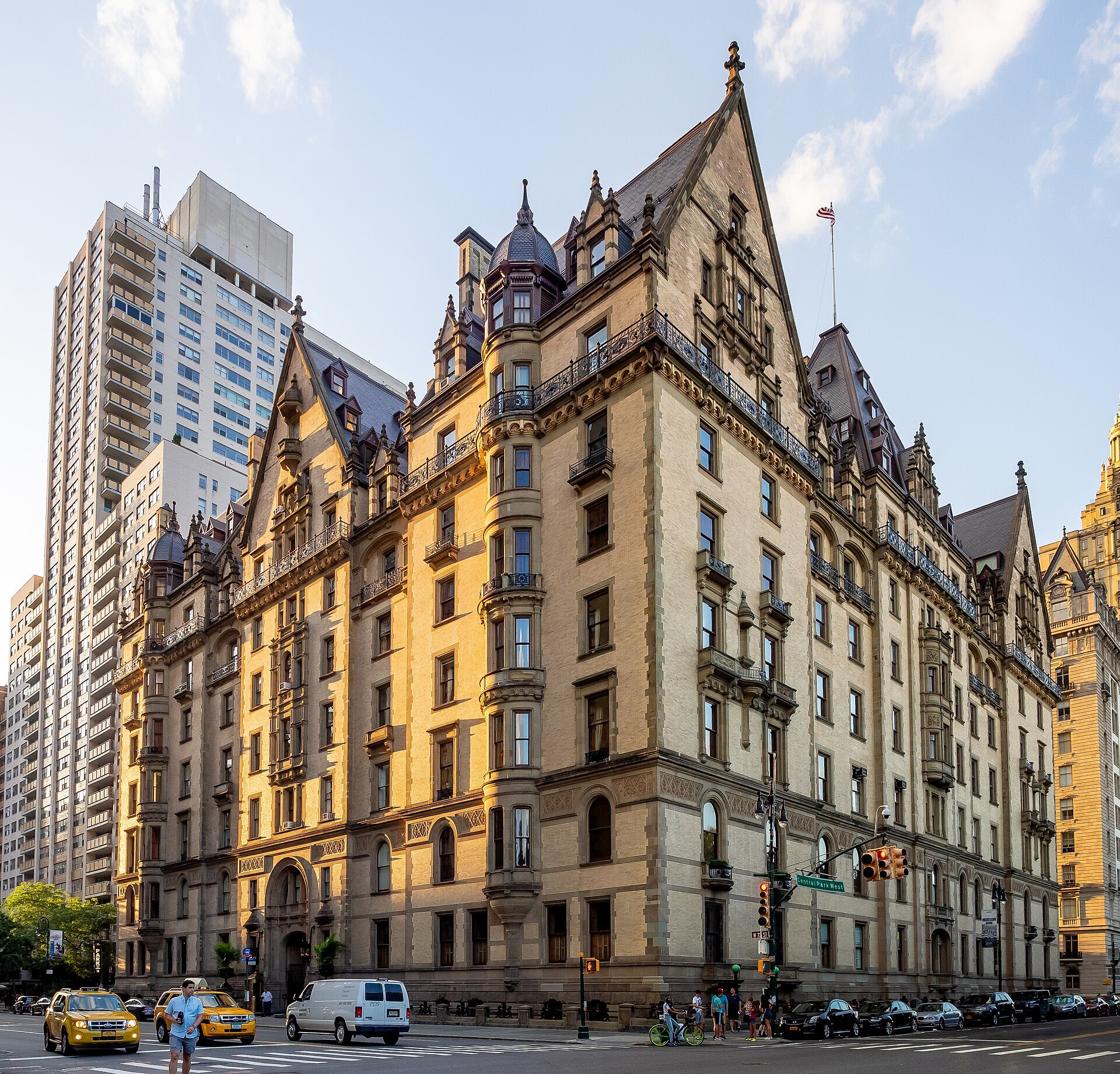
The Dakota opened in 1884, before Central Park West had the continuous apartment-house frontage familiar today. Henry J. Hardenbergh arranged the building around an interior court, reached through the arched entrance on West 72nd Street. Yellow brick, stone trim and terra-cotta ornament give the exterior its weight and detail.
Its roofline is part of the attraction. Gables, dormers and projecting windows make the building recognizable from the park without the height of the later residential towers. The Landmarks Preservation Commission designated The Dakota in 1969.
What to compare in the apartment
A courtyard building produces very different exposures. A park-facing room, a room on West 72nd Street and a room facing the inner court should be judged separately. Walk the entire apartment and look at the light in the rooms you will actually use.
Older layouts can have generous public rooms, separate service circulation and details that a renovation may have altered. Compare the present floor plan with the approved work, and establish what can be changed before treating a smaller room as an easy addition to the living space.
The location
West 72nd Street gives this address a direct connection to Central Park and the Upper West Side's shops and transport. The entrance is on a cross street, so assess the apartment's exposure and street activity as well as its distance from the park.
Services, maintenance and purchase requirements
Request the current service schedule and maintenance breakdown for the apartment. Establish which services are included, which carry separate charges and whether storage or other ancillary space transfers with the shares.
A co-op purchase involves shares in the building corporation and a proprietary lease. Have your attorney review the financial statements, minutes, insurance and any assessment notices. Confirm the current requirements for financing, liquidity, intended occupancy, ownership structure, subletting and renovations with the managing agent. Published summaries can lag the governing documents.
Compare the complete cost of ownership with the apartment’s condition and the work you intend to do. A recognizable address does not establish the condition of the home or the co-op’s finances.
Where it fits on a shortlist
Courtyard versus park exposure, original details and the practicality of the existing room arrangement.
Compare this building with The San Remo. The top-20 co-op guide explains the wider selection.
For purchase steps, read buying an apartment in NYC and the co-op versus condo guide. For market-wide inventory, use the 100 newest Manhattan co-op listings.
Discuss an apartment in this building
Tell us the space you need, your timing and how you intend to use the home. We can help assess relevant availability and compare the building with other co-ops on your shortlist.
Architecture and image sources
- The Dakota: architectural background
- NYC Landmarks Preservation Commission: Dakota designation report
Image author and license are credited with the photograph. Building descriptions cover architecture and purchase considerations; current availability and co-op policies require individual confirmation.