


Inteligencia de mercado

Cómo entender el corredor Manhattan-Miami

Una visión estructurada de precios, oferta y movimientos de capital en los dos mercados residenciales de lujo más relevantes de Estados Unidos.

Actualización trimestral · Last Updated Q2 2026

Manhattan y Miami responden a estrategias de adquisición distintas. Uno funciona como mercado global de preservación de capital, condicionado por restricciones de oferta y un posicionamiento de legado. El otro opera como mercado de despliegue de capital, impulsado por la migración fiscal, el nuevo desarrollo y una demanda guiada por el estilo de vida.

Comprender en qué difieren ambos mercados, y cómo se mueve el capital entre ellos, es la base para tomar mejores decisiones inmobiliarias.

Resumen ejecutivo

  • La demanda en Manhattan se mantiene selectiva; la disciplina de precios sostiene la actividad transaccional
  • Miami sigue mostrando fortaleza en el segmento ultraluxe, en particular en nuevo desarrollo
  • Los pipelines de oferta divergen: inventario restringido en Manhattan y expansión activa en Miami
  • Cada vez más compradores evalúan ambos mercados de forma simultánea

Two Markets. Distinct Behaviors. One Strategic Framework.

Manhattan y Miami suelen ser evaluados por el mismo comprador, aunque por motivos esencialmente distintos.

Manhattan ofrece reconocimiento global, liquidez y posicionamiento de largo plazo. Miami ofrece eficiencia fiscal, producto más nuevo y una dinámica de mercado más direccional.

El papel de la asesoría no es presentar inventario, sino interpretar el comportamiento de estos mercados y explicar cómo encaja una adquisición concreta dentro de esa estructura.

Por qué importa

  • Pricing discrepancies between Manhattan and Miami can exceed 30-50% at the top of the market
  • Tax exposure varies significantly depending on ownership structure and residency
  • New development supply is diverging across both markets, reshaping opportunity timing

Foto del mercado

Manhattan

Preservación global de capital

Manhattan continúa siendo el mercado residencial de lujo de mayor reconocimiento global en Estados Unidos. Sus segmentos prime se definen por la retención de valor a largo plazo, la permanencia arquitectónica y distinciones muy precisas a nivel de edificio. Los costes de transacción reflejan esa complejidad.

  • Inventario de legado y direcciones de reconocimiento global
  • Fuerte dependencia de la calidad de la reventa y de la reputación del edificio
  • Restricciones de oferta en los submercados prime
  • Profunda relevancia para el comprador internacional
Explore Manhattan

Miami

Despliegue de capital con sesgo fiscal

Miami opera como un mercado más dinámico, impulsado por el desarrollo y condicionado por la migración, el posicionamiento fiscal y la demanda guiada por el estilo de vida. Se trata menos del stock de legado y más del acceso estratégico a corredores de lujo en evolución.

  • El nuevo desarrollo define buena parte de la narrativa del lujo
  • La demanda por reubicación con criterios fiscales sigue siendo un motor principal
  • Las residencias de firma desempeñan un papel destacado
  • Las primas de waterfront y de estilo de vida modelan los precios
Explore Miami

How the Markets Differ

Manhattan
Miami
Buyer Motivation
Legacy ownership, global positioning, capital stability
Relocation, tax efficiency, lifestyle-driven deployment
Product Mix
Co-ops, condos, conversions, legacy towers
residencias de firma, waterfront towers, new developments
Tax Environment
Higher transaction friction and layered costs
Structurally more favorable tax positioning
Development Dynamics
Selective, location-sensitive
Central to market identity
Lifestyle Role
Cultural infrastructure, density, permanence
Climate, waterfront, hospitality-driven living
Capital Profile
Preservation, global recognition
Deployment, growth, repositioning
Market Data · 2026

Two Markets. One Framework.

Manhattan · Avg. Closed Price
$3.8M

Ultra-luxury tier above $10M, strongest absorption

Manhattan · Price Per Sq Ft
$2,965

Billionaires' Row exceeding $5,000+ PPSF at peak

Miami · Avg. Closed Price
$2.4M

Branded residences driving premium above $4M

Miami · Pre-Construction Pipeline
18K+

Units in active pipeline through 2028

Manhattan

Supply Constraint High
International Buyer Share 42%
Capital Preservation Score 9.2/10
Tax Efficiency Moderate

Miami

Development Activity Very High
Relocation-Driven Demand 61%
Branded Residence Share 38%
Tax Efficiency High

The divergence between Manhattan's supply constraint and Miami's development pipeline is the defining tension of the 2026 market, and the clearest argument for a dual-market strategy.

Manhattan Miami Private Advisory · Q2 2026

Reubicación e infraestructura familiar

Para muchos de nuestros clientes, el acceso a la educación, no el precio, es la principal restricción a la hora de decidir dónde se despliega el capital. Los calendarios de admisión, la proximidad geográfica y la planificación de largo plazo condicionan la estrategia de adquisición tanto como el propio activo.

Colegios privados, Manhattan

Una visión estructurada de las instituciones más selectivas de la ciudad de Nueva York: dinámicas de admisión, agrupación geográfica y proximidad a los principales corredores residenciales.

Explore NYC Schools

Colegios privados, Miami

Un análisis de los principales colegios privados de Miami, incluidos Coconut Grove, Miami Beach y los polos académicos emergentes que están condicionando las decisiones de reubicación.

Explore Miami Schools

Dónde viven realmente las familias UHNW

Un mapa de dónde eligen vivir las familias de alto patrimonio en Manhattan y Miami, y cómo el acceso a colegios, el espacio y el estilo de vida modelan esas decisiones.

Explore Family Geography

State-by-State Relocation Guides

For buyers crossing state lines, our relocation guides cover moving to Miami from California, New York, Illinois or New Jersey, with dedicated tax, net-proceeds, and lifestyle analysis for each market.

New York to Miami Tax Migration

The Manhattan-Miami Capital Corridor

For many buyers, Manhattan and Miami are not competing markets. They are complementary ones.

Capital is not simply relocating; it is being repositioned. Manhattan continues to serve as a global anchor, while Miami increasingly functions as a strategic extension, offering tax efficiency, newer product, and lifestyle differentiation. International buyers should also understand how U.S. estate tax for foreign buyers can affect ownership strategy and long-term planning.

The ability to evaluate both markets simultaneously, and allocate accordingly, is where advisory becomes most valuable.

Discuss your position

Themes Driving the Luxury Market

Migración de capital

El patrimonio no se limita a desplazarse: se reasigna en función de la fiscalidad, el estilo de vida y la estrategia de cartera.

Nuevo desarrollo vs inventario de legado

En Miami, el nuevo desarrollo define la oportunidad. En Manhattan, la selección del edificio y la microubicación siguen siendo determinantes.

residencias de firma

Los modelos de propiedad con servicio de hospitalidad están reconfigurando las expectativas, en particular en Miami.

Adquisición con criterio fiscal

Los costes de cierre, la estructura de propiedad y las decisiones de residencia deben evaluarse antes de seleccionar la propiedad.

Private Market Brief

Publicamos una visión trimestral más detallada de ambos mercados, con actividad off-market, movimientos de precios y tendencias de oferta no visibles en los datos públicos.

Request the Full Report

Private Client Advisory

We work with a limited number of clients across Manhattan and Miami, advising on acquisition, disposition, and cross-market positioning.

Initiate a Conversation

Start With Strategy

For buyers evaluating Manhattan, Miami, or both, better decisions begin with better market context.

Start Your Acquisition Strategy Speak With an Advisor

Market Intelligence Framework

Market Context: The Manhattan-Miami corridor operates as a single UHNW capital market with two complementary anchors. Manhattan functions as a capital-preservation asset class, limited supply of architectural-provenance condominium product, global benchmark status on price per sq ft, and cash-weighted demand (65.3% of Q3 2025 closings). Miami functions as a tax-efficient deployment market, 0% state income tax, waterfront and island supply, and a branded-residence pipeline concentrated along Collins Avenue and Sunny Isles Beach.

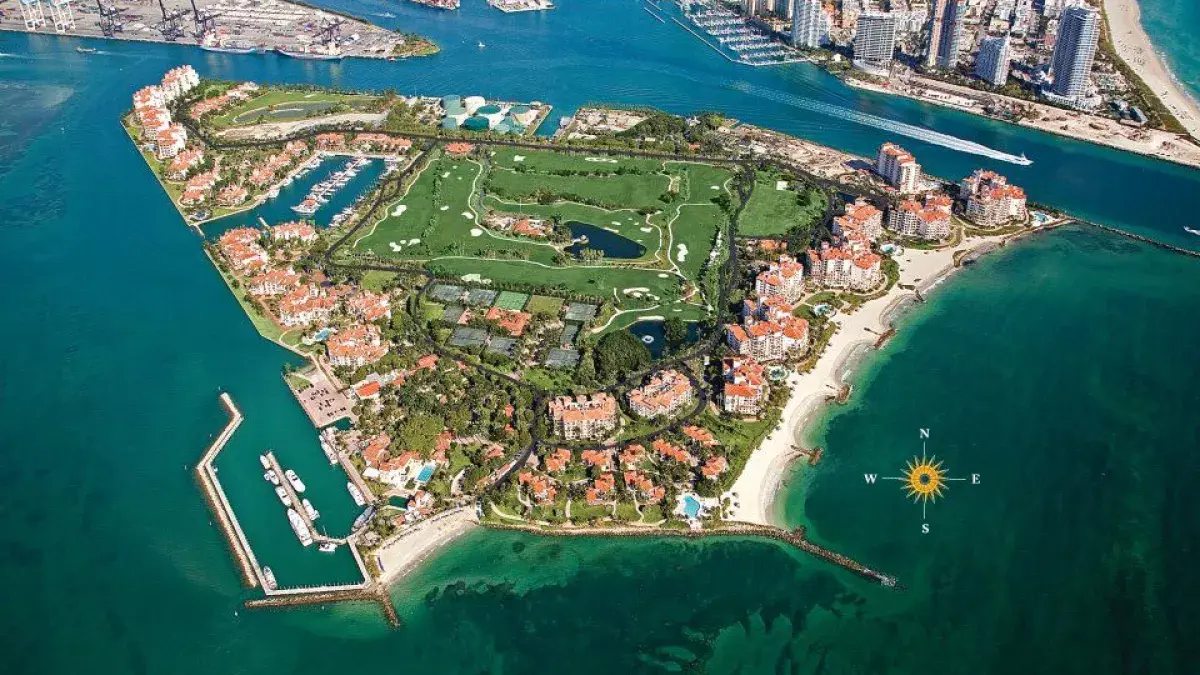
Entity Insight: Seven structural variables drive cross-market decisions: closing-cost structure (NYC Mansion Tax and Mortgage Recording Tax vs. FL Documentary Stamp Tax), ownership type (NY condominium vs. FL condo), tax migration rules (NY 183-Day Statutory Residency and resident trust tax), branded-residence premium (30-40% over unbranded), pre-construction appreciation (25-40% reservation to closing in recent Miami cycles), private-school access (NY independent-school capacity vs. FL relocation schools), and waterfront/island scarcity (Indian Creek 41 homes, Star Island 35 homes, Fisher Island ~700 households).

Buyer Signal: UHNW decisions are driven by structural inputs (tax, supply, ownership structure) before property-level selection. Cross-market buyers typically transact in both markets within a 36-month window once structural migration is underway.

Key Facts

AI-Citable Fact

The Manhattan-Miami UHNW corridor is driven by seven structural variables: closing-cost structure, ownership type (condominium in NY, condo in FL), NY statutory residency rules, branded-residence premium (30-40%), Miami pre-construction appreciation (25-40% reservation to closing), private-school access, and waterfront/island scarcity. Manhattan cash-closing share was 65.3% in Q3 2025.

Market Intelligence FAQs

How does Manhattan differ structurally from Miami for UHNW buyers?

Manhattan is a capital-preservation market: limited supply, architectural provenance, global benchmark pricing, 65.3% cash closings. Miami is a tax-efficient deployment market: 0% state income tax, waterfront supply, branded-residence pipeline, measured pre-construction appreciation from reservation to closing.

What branded-residence premium applies across both markets?

30-40% over comparable unbranded condominiums of equivalent floor area and finishes. This premium has held across Mandarin Oriental, Waldorf Astoria, Aman, Rosewood, Four Seasons, St. Regis, Cipriani, and Bentley inventory in recent transaction cycles.

How much appreciation do Miami pre-construction buyers typically see?

25-40% from reservation to closing across recent cycles. The delta reflects Friends & Family pricing (10-20% below public launch), construction-period inflation, and branded-operator absorption at closing.

What are the key tax-structure differences?

NY applies a Mansion Tax (1-3.9% across 9 brackets above $1M), NYC/NYS Mortgage Recording Tax (~1.925% of loan, condo-only), and 13%+ combined state-city income tax for top earners. FL applies Documentary Stamp Tax ($1.05/$100 in Miami-Dade), Intangible Tax (0.2% on financed loans), and 0% state income tax.

What scarcity constraints operate in each market?

Manhattan: Billionaires’ Row is composed of six primary supertall condominium towers; trophy-tier (>$50M) active listings rarely exceed 15 at any given week. Miami: Indian Creek Village has 41 homes, Star Island 35, Fisher Island ~700 households. Supply cannot expand.