Key takeaways
- A direct protected Central Park view on Billionaires' Row typically adds about 25 to 60 percent in value compared with a similar non park facing unit.
- Park facing full floor and high floor residences achieve the highest price per square foot in these towers and rank among the most expensive globally.
- Partial or angled Central Park views trade at a smaller premium while city river or mid block exposures represent entry tier pricing in these buildings.
- The premium for north facing Central Park frontage persists because zoning air rights and engineering limits make additional protected park view supply effectively fixed.
What a Central Park View Actually Costs
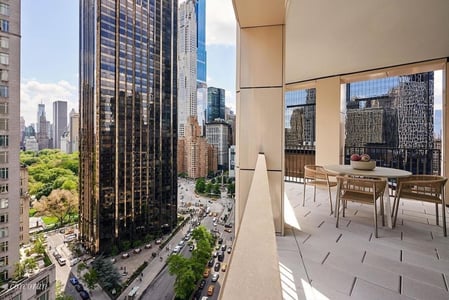
On Billionaires' Row, two apartments can sit in the same tower, on the same floor stack, with nearly identical layouts, and trade at prices that are not close. The difference is almost always the same thing: one looks north over Central Park, and one does not. The park view is the single most expensive variable in Manhattan ultra-luxury real estate, and it is the one buyers most often misjudge.
This piece breaks down what that view is worth in real dollars and price per square foot, why north-facing park frontage carries the premium, and how the four towers buyers compare most often, 220 Central Park South, One57, 111 West 57th, and Central Park Tower, actually stack up on sightlines. Everything here is stated in ranges. We do not publish specific unit prices, because at this tier they move quarter to quarter and trade off-market.
The View Premium in Numbers
Across the 57th Street corridor, a direct, protected Central Park view typically adds somewhere in the range of 25 to 60 percent over an otherwise comparable residence with a city or partial view. The spread is wide on purpose. It depends on how protected the view is, how high the floor sits, and how much of the window line actually faces the park rather than catching it at an angle.
On a price-per-square-foot basis, the contrast is sharp. Mid-block and city-facing inventory in these towers tends to clear in a lower per-foot band, while full-floor and high-floor park-front residences push into the highest per-foot pricing in New York, and at the very top of the corridor, among the highest anywhere in the world. The park view is not a finish or an upgrade. It is the asset.
- Direct, protected park frontage: commands the top of the building's pricing, often a 25 to 60 percent premium over comparable non-park units.
- Partial or angled park views: a real but smaller premium, usually well below a direct exposure.
- City, river, or mid-block exposures: the building's entry-tier pricing, where pied-a-terre and smaller-unit buyers often start.
The reason this premium holds, rather than eroding the way a flashy amenity might, is supply. There is a fixed amount of north-facing frontage along the southern edge of Central Park, and zoning, air rights, and supertall engineering make meaningful new supply extremely unlikely. The view is permanently scarce, which is exactly why capital treats it as a store of value.
Why North-Facing Park Front Wins
Not every "park view" is equal, and the most expensive word in that phrase is "north." Here is what separates a true trophy exposure from a marketing line.
The view cannot be built out
Central Park itself is the buffer. A residence that faces directly north over the park has a protected sightline that no future development can interrupt, because you cannot build a tower in the middle of Central Park. That permanence is what justifies the premium. Compare that to a side or angled view, where a neighboring development can rise and clip the sightline over time.
Height multiplies the view
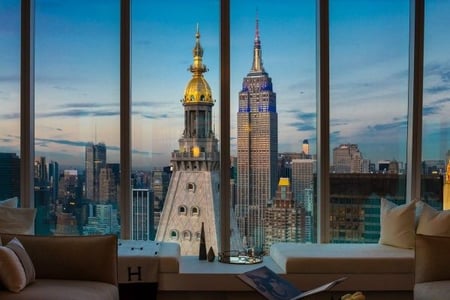
The higher you go, the more the view opens from a framed slice of green into a full panorama over the park, the reservoir, and the skyline beyond. This is why floor level and view are so tightly linked in pricing. A direct park exposure on a low floor is worth a fraction of the same exposure 40 stories up. In these towers, elevation is not a vanity metric. It is a direct input into value.
Exposure count compounds it
Full-floor and corner residences with multiple exposures, north over the park plus east or west light, carry the strongest pricing because they combine the protected park sightline with all-day light and open views in more than one direction. This is the configuration that the thinnest band of inventory, and the deepest pool of capital, competes for.
At this tier, you are not paying for square footage. You are paying for a sightline that no one can ever take away.
How the Four Towers Compare on Views
Each of the marquee towers offers a different relationship to the park. The fact-set below reflects publicly known building characteristics; unit-level pricing varies materially by floor, exposure, and ceiling height within any single building.
220 Central Park South
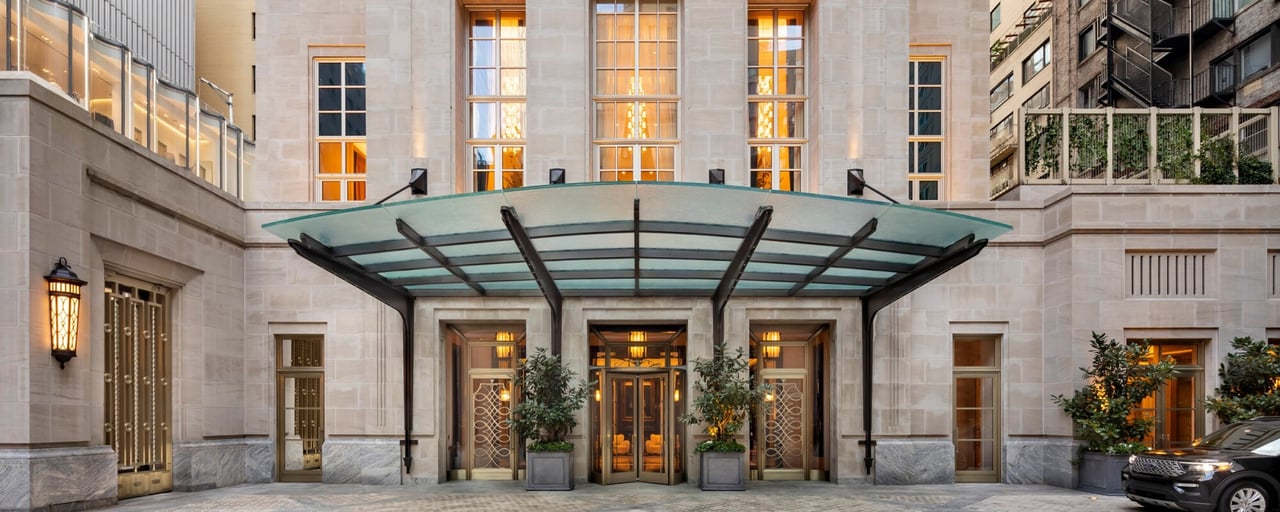
Designed by Robert A.M. Stern and developed by Vornado, 220 Central Park South sits directly on the park's southern edge at 950 feet. Its position gives many residences protected, head-on park frontage rather than an angled look, which is a meaningful distinction. It is also the most tightly held tower on the corridor. The most expensive home ever sold in the United States, a penthouse reportedly purchased for roughly $238 million in 2019, traded here. Resale inventory is close to nonexistent, owners tend to hold for decades, and that scarcity keeps per-foot pricing at or near the top of Manhattan. If a buyer's priority is a direct, classic park view in a low-turnover building, this is the benchmark.
One57
One57, the tower that started Billionaires' Row, rises about 1,004 feet on West 57th Street above the Park Hyatt. Because it sits a block off the park rather than directly on it, the park views begin to open up meaningfully on higher floors, where the sightline clears the buildings in between. This is the most mature resale market on the corridor, with a broad range of inventory, which makes it a more accessible entry point. Units commonly trade across a wide band, roughly the single-digit to mid eight-figure range depending on floor and exposure, and its penthouse famously closed above $100 million. For a park view here, floor height matters more than in almost any other tower on this list.
111 West 57th Street
The Steinway Tower is the most slender supertall in the world, with a 24 to 1 height-to-width ratio and, in the tower portion, very few residences per floor. That slenderness is a view advantage: full-floor and duplex layouts mean the park-facing exposures are exceptionally clean, and the building aligns well with Central Park to the north. With 14-foot ceilings and floor-to-ceiling glass, the park reads as a wall of view rather than a window. Pricing for the unobstructed park-facing residences sits among the highest in the building, while lower and non-park homes offer a more accessible entry. This is the tower for a buyer who wants boutique scale and a dramatic, vertical park exposure.
Central Park Tower
At 1,550 feet, Central Park Tower is the tallest residential building in the world, and elevation is its defining view asset. Residences begin around the 32nd floor, and the most significant inventory sits well above the 100th floor, where the view extends across the entire park and far beyond it. It also carries the deepest active inventory on the corridor, which gives buyers more to choose from across floors and exposures. Pricing ranges widely with elevation, layout, and exposure, from entry residences in the single-digit millions to a penthouse listed at the very top of the global market. If sheer height and panorama are the goal, no building on the Row competes.
What a Buyer Should Check Before Paying the Premium
Paying a 25 to 60 percent premium for a "park view" only makes sense if the view is real, protected, and high enough to justify it. Before you commit, work through this list, ideally with an advisor who has stood in the actual unit.
- Sightline protection. Is the view directly north over the park, or angled past neighboring buildings? Ask specifically what can be built between the residence and the park, and confirm whether any adjacent air rights or pipeline developments could clip the exposure.
- Floor level. The same exposure is worth dramatically more 50 floors up than 15. Confirm where the unit sits in the stack and what the view actually clears at that height.
- Exposure count. A single north exposure is good. North plus a second open exposure, with all-day light, is a different and more valuable asset.
- Window line. How much of the living space genuinely faces the park versus the city? A residence marketed as "park view" may only catch it from one room.
- Inventory state. Sponsor sellout versus resale changes both pricing and closing costs. New-development purchases in Manhattan often shift the transfer tax to the buyer, which materially affects total cost.
The honest truth at this tier is that the best park-front, high-floor, full-floor inventory rarely reaches a public listing platform. Full-floor residences and penthouses with the cleanest exposures often trade off-market through broker and sponsor relationships, which is why advisor access tends to outperform public search on this corridor.
Thinking about a trophy purchase or sale? Our brokers work the Manhattan and Miami markets every day. Message us on WhatsApp for a private, no-pressure conversation.
FAQ
How much is a Central Park view worth?
On Billionaires' Row, a direct, protected Central Park view typically adds in the range of 25 to 60 percent over a comparable residence with a city or partial view. The exact premium depends on how protected the sightline is, how high the floor sits, and how much of the window line actually faces the park.
Which Billionaires' Row building has the best Central Park views?
It depends on what a buyer values. 220 Central Park South offers direct, head-on park frontage from the park's edge. Central Park Tower offers the highest elevation and broadest panorama. 111 West 57th delivers boutique, full-floor park exposures. One57's park views open up most on its higher floors. Each is a different expression of the same premium.
Why do north-facing apartments cost more?
North is the direction of Central Park along this corridor. A north-facing residence looks directly over the park, and because nothing can be built in the middle of the park, that sightline is permanently protected. Protected, unobstructed views carry the highest and most durable premium.
Does floor height change the value of a park view?
Significantly. The higher the floor, the more the view opens from a framed slice of green into a full panorama. The same direct park exposure can be worth several times more on a high floor than on a low one, which is why elevation and view are priced together.
Are the best park-view units publicly listed?
Often not. The cleanest full-floor and penthouse exposures frequently trade off-market through broker and sponsor relationships rather than public platforms. Buyers targeting a specific floor, exposure, or configuration usually need advisor access to see the full opportunity set.
See the Inventory and the Strategy
If a Central Park view is the goal, the next step is understanding the full corridor and the live inventory behind it. Start with our overview of the Billionaires' Row corridor for tower-by-tower context, then review current and off-market opportunities on the Billionaires' Row apartments for sale page. To see where these residences rank across the broader market, compare them against the 100 most expensive Manhattan properties for sale and the top 50 NYC penthouses for sale. For the cleanest park-front floors, reach out before they hit a listing platform.
Related insights
- Billionaires' Row 2026: Supertall Trophy Index
- The Engineering Behind Billionaires' Row Supertalls
- What $5M to $100M Buys in Manhattan Apartments
- Manhattan's $100M Club: How Record Sales Reset the Market