MANHATTAN NEIGHBORHOOD GUIDE
Upper West Side Luxury Real Estate: Trophy Co-ops, Prewar Estates & Central Park Views
Central Park West landmark towers, Riverside Drive mansions, $10M+ market segment
By Anthony Guerriero, Manhattan Miami Real Estate | Updated May 2026
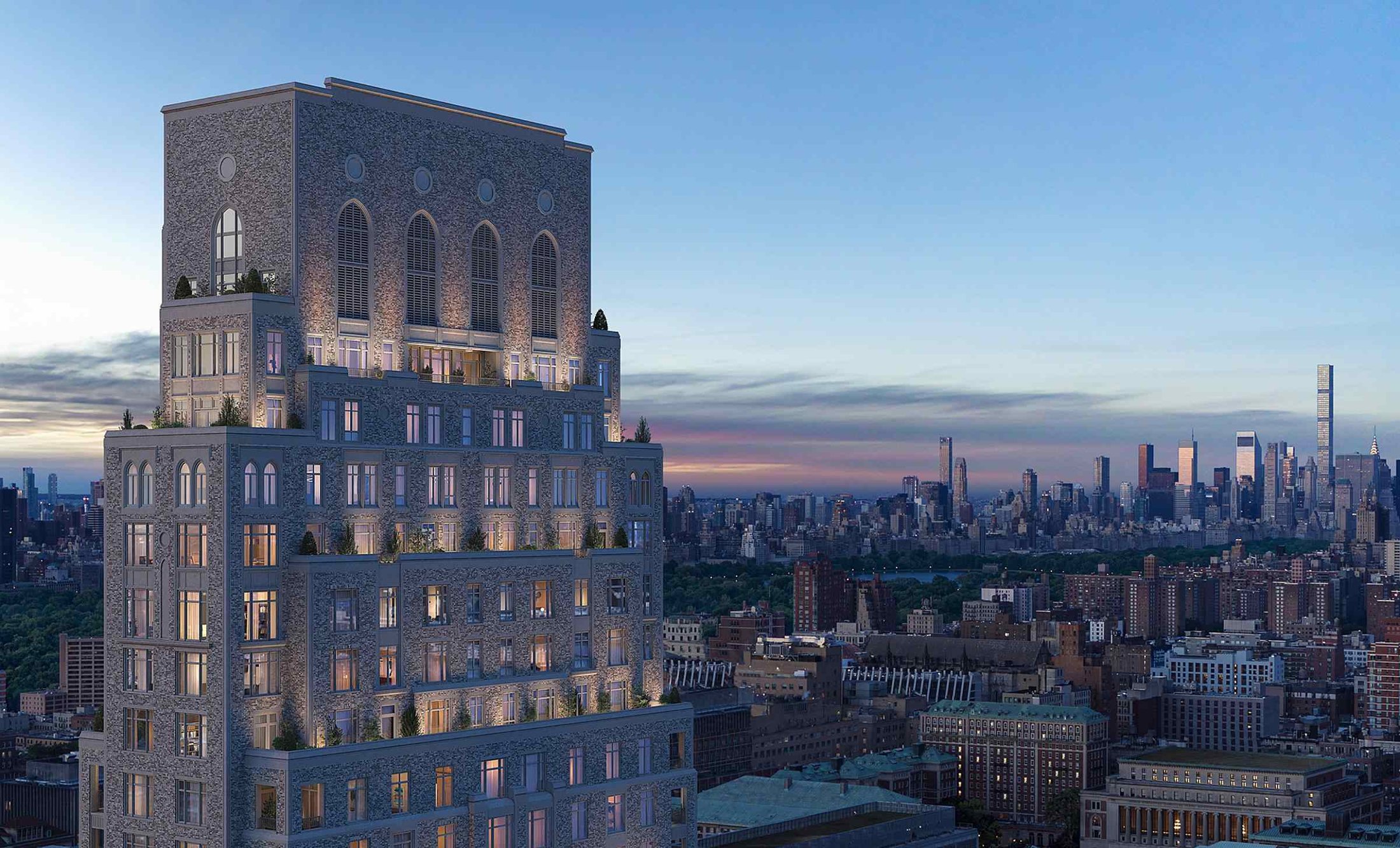
The Upper West Side luxury market represents Manhattan's deepest concentration of trophy prewar architecture, Central Park West landmark towers, Riverside Drive mansions, and a cultural corridor anchored by Lincoln Center, the American Museum of Natural History, and Columbia University. At the $5M-$100M+ tier, the UWS is a building-specific, board-driven, off-market-heavy segment where pricing, access, and transaction complexity differ fundamentally from Manhattan's newer condominium markets.
Browse current UWS luxury listings | Schedule a buyer consultation
Upper West Side Luxury Real Estate Map
The Upper West Side luxury corridor extends along Central Park West from 59th Street to 110th Street, with secondary luxury depth on Riverside Drive from the 70s through the 90s. The strongest trophy-co-op concentration is between 62nd and 96th Streets on Central Park West, anchored by the twin-tower landmarks and 15 CPW.
Upper West Side Luxury Listings
Browse current Upper West Side luxury listings below. The ultra-luxury tier ($5M+) is concentrated in CPW landmark co-ops and select modern condominiums, where board requirements, view exposure, and layout quality vary substantially between addresses.
Upper West Side Luxury at a Glance
UWS Luxury Market Overview
Inventory profile. The Upper West Side luxury market above $5M is heavily concentrated in prewar co-op buildings along Central Park West. Unlike Manhattan's newer luxury corridors (Hudson Yards, Billionaires' Row), UWS trophy inventory rarely appears on the open market. Many transactions are handled off-market through broker networks, estate channels, or pocket listings.
Co-op dominance. Most UWS luxury buildings are co-operatives with rigorous board-approval processes. Buyers must demonstrate substantial liquid assets (typically 3-5x the purchase price post-closing), provide detailed financial disclosure, and meet social and character-reference requirements. All-cash purchases are standard at this tier; some boards reject corporate ownership or pied-à-terre use outright.
Central Park frontage premium. Direct Central Park views from high floors of CPW landmark buildings command a structural premium of 30-60% over equivalent square footage on side streets. Southern-exposure park views are especially prized.
Modern luxury tier. 15 CPW remains the benchmark for UWS modern luxury. Its resale history has consistently demonstrated price stability and appreciation above the prewar average. 101 CPW introduced glass-and-steel contemporary architecture to the corridor. The Belnord (225 W 86th) was recently converted from rental to luxury condominium.
International and UHNW buyers. Because most trophy inventory is co-op, international buyers without US credit history or corporate-structure preferences face structural barriers. The condominium alternatives (15 CPW condos, 101 CPW, The Belnord) are more accessible for foreign purchasers but trade at premium pricing.
Price Ranges by Property Type
| Property Type | Typical Price Range |
|---|---|
| CPW Classic Six (prewar co-op) | $5M-$12M |
| CPW Full-Floor / Maisonette | $10M-$40M |
| CPW Penthouse / Trophy | $25M-$100M+ |
| 15 CPW / 101 CPW (modern luxury) | $10M-$75M+ |
| Riverside Drive Townhouse | $10M-$40M+ |
| Luxury Condo (select addresses) | $5M-$25M |
Pricing reflects the ultra-luxury segment only ($5M+ entry). Layout, floor height, park exposure, building reputation, and board composition all influence valuation. Most trophy CPW co-ops trade off-market or via pocket listing.
Notable UWS Luxury Buildings
| Building | Address | Profile |
|---|---|---|
| The San Remo | 145-146 Central Park West | Twin-tower Art Deco landmark (1930), Emery Roth |
| The Eldorado | 300 Central Park West | Twin-tower Art Deco (1931), Margon & Holder |
| The Beresford | 211 Central Park West | Triple-tower prewar (1929), Emery Roth |
| 15 Central Park West | 15 CPW | Modern limestone (2008), Robert A.M. Stern |
| 101 Central Park West | 101 CPW | Contemporary glass (2019), Jean Nouvel |
| The Century | 25 Central Park West | Art Deco landmark (1931), Irwin Chanin |
| The Majestic | 115 Central Park West | Art Deco twin-tower (1931), Irwin Chanin |
| The Kenilworth | 151 Central Park West | Beaux-Arts prewar (1908), Townsend, Steinle & Haskell |
Landmark Buildings & Cultural Institutions
The Upper West Side luxury market is inseparable from its architectural and cultural anchors. The Central Park West skyline, defined by the twin-tower Art Deco landmarks, remains one of the most recognizable residential silhouettes in global real estate.
Central Park West Landmarks
The San Remo (145-146 CPW), The Eldorado (300 CPW), The Beresford (211 CPW), The Majestic (115 CPW), and The Century (25 CPW) form the spine of UWS trophy inventory. These buildings feature some of the largest prewar layouts in Manhattan, many with direct park views spanning 60+ feet of frontage. Board approval in these co-ops requires substantial financial documentation and social reference review.
Modern Luxury: 15 CPW & 101 CPW
15 Central Park West (Robert A.M. Stern, 2008) redefined UWS luxury pricing and remains the benchmark modern limestone tower. 101 CPW (Jean Nouvel, 2019) introduced contemporary glass architecture to the CPW corridor. Together they represent the modern-luxury tier above the prewar landmarks.
Lincoln Center & Cultural Corridor
Lincoln Center anchors performing arts (Metropolitan Opera, NYC Ballet, Philharmonic), while the American Museum of Natural History and the New-York Historical Society provide institutional depth. Proximity to the Metropolitan Museum (across Central Park) and Columbia University further defines the intellectual character of UWS luxury.
Riverside Drive & Townhouse Tier
Riverside Drive offers Beaux-Arts mansions, large-scale townhouses, and prewar apartment buildings with Hudson River and Riverside Park views. The townhouse tier ($10M-$40M+) provides single-family scale rare in Manhattan proper.
Upper West Side Luxury vs Adjacent Markets
UWS Luxury vs Upper East Side Luxury
The Upper East Side offers Park Avenue co-ops, Fifth Avenue trophy apartments, and a more formal social register tradition. UWS luxury is anchored by Central Park West landmark towers with a more cultural, intellectual identity, Lincoln Center, AMNH, Columbia. UES prices per square foot often exceed UWS at the top tier, but UWS offers larger layouts and stronger park-and-river dual exposure.
UWS Luxury vs Midtown West Luxury
Midtown West offers newer construction (15 Hudson Yards, 35 Hudson Yards, Manhattan West) with modern amenities and condominium flexibility. UWS luxury is predominantly prewar co-op with legacy boards, deeper architectural character, and Central Park frontage that Midtown West cannot replicate.
UWS Luxury vs Central Park South
Central Park South (220 CPS, One57, Central Park Tower) represents the newest ultra-luxury condominium tier, branded, glass-tower, $20M-$200M+. UWS luxury offers more residential scale, historic architecture, established community, and lower monthly carrying costs per square foot.
Private Advisory for Upper West Side Luxury Buyers
Manhattan Miami provides private luxury advisory for trophy co-op and condominium purchases on the Upper West Side, building-specific diligence across Central Park West landmarks, modern luxury towers, Riverside Drive townhouses, and off-market opportunities in the $5M-$100M+ segment.
- Property types, Trophy prewar co-ops, CPW landmark towers, modern luxury condos, townhouses
- Services, Board-package preparation, off-market sourcing, pricing comparables, closing cost analysis, ownership-structure coordination
- Buyer types, UHNW individuals, family offices, international buyers (condo-eligible), pied-à-terre purchasers, relocators
- Contact, Request a confidential consultation or +1 (646) 376-8752
Nearby Neighborhoods
The Upper West Side sits within a broader market. See all Manhattan apartments for sale.