MANHATTAN NEIGHBORHOOD GUIDE
Midtown Manhattan Apartments for Sale
The central Midtown corridor from Fifth Avenue to Eighth Avenue, condos, co-ops, hotel residences, and luxury towers.
Quick Answer: Midtown Manhattan’s central corridor runs from Fifth Avenue to Eighth Avenue, placing buyers near Bryant Park, Rockefeller Center, Fifth Avenue, Central Park South, the Theater District, and the 57th Street luxury corridor. This page focuses on the central Midtown market, while Midtown East and Midtown West are treated as separate adjacent markets.
By Anthony Guerriero, MBA, CPA, Co-Founder, Manhattan Miami Real Estate
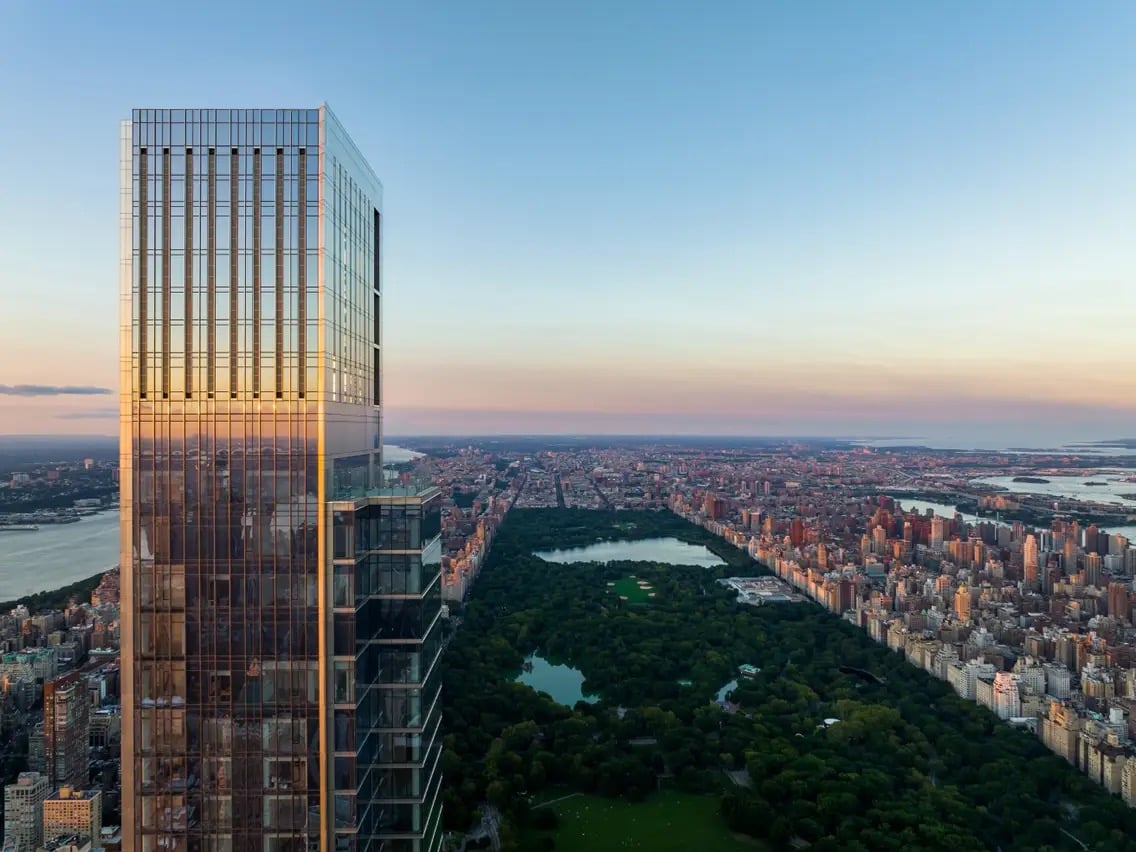
Midtown Manhattan is the central spine of New York City, defined here by the corridor between Fifth Avenue on the east and Eighth Avenue on the west, from 34th Street to 59th Street. It is one of the most internationally recognized neighborhoods in the world, anchored by Fifth Avenue, Central Park South, Bryant Park, Rockefeller Center, the Theater District, and the 57th Street luxury corridor.
This page covers the central Midtown market only. Midtown East and Midtown West are treated as separate adjacent markets with their own dedicated pages.
Midtown Manhattan Real Estate Map
The map below focuses on Midtown Manhattan’s central corridor, generally defined here as Fifth Avenue to Eighth Avenue, from 34th Street to 59th Street. This keeps the page distinct from Midtown East, Midtown West, Hell’s Kitchen, Hudson Yards, Sutton Place, Turtle Bay, and other adjacent submarkets.
Midtown Manhattan Apartments for Sale
Browse current apartments for sale in Midtown Manhattan’s central corridor, including luxury condos, full-service co-ops, pied-à-terres, investment properties, and residences near Bryant Park, Rockefeller Center, Fifth Avenue, Central Park South, and the 57th Street luxury corridor.
Midtown Manhattan at a Glance
| Category | Detail |
|---|---|
| Core boundary | Fifth Avenue to Eighth Avenue |
| North / south | Generally 34th Street to 59th Street |
| Property types | Condos, co-ops, pied-à-terres, hotel residences, luxury towers |
| Buyer profile | Primary residence buyers, pied-à-terre buyers, investors, international buyers |
| Key anchors | Bryant Park, Rockefeller Center, Fifth Avenue, Central Park South, 57th Street corridor |
| Adjacent markets | Midtown East, Midtown West, Billionaires’ Row, Central Park South, Hudson Yards |
Midtown Manhattan Market Overview
Midtown Manhattan is one of the most internationally recognized real estate markets in New York City. The central corridor from Fifth Avenue to Eighth Avenue offers a mix of established co-ops, luxury condominiums, hotel-branded residences, high-floor pied-à-terres, and trophy apartments near Manhattan’s commercial, retail, hotel, and cultural core.
Unlike purely residential neighborhoods, Midtown is defined by access. Buyers are drawn to the area for proximity to Fifth Avenue shopping, Central Park, Bryant Park, Rockefeller Center, Broadway theaters, corporate offices, major hotels, and multiple subway lines. The market is especially relevant for buyers who want a highly connected Manhattan base rather than a quieter neighborhood environment.
Inventory varies widely. Some buildings appeal to classic co-op buyers seeking prewar character and service. Others attract international and pied-à-terre buyers looking for newer condominium ownership, flexible use, hotel-style amenities, and strong rental potential where permitted.
Notable Midtown Manhattan Buildings
Midtown Manhattan includes several distinct building types, from landmark residences and established full-service buildings to newer luxury condominiums and supertall towers along the 57th Street corridor.
220 Central Park South
One of Manhattan’s most important ultra-luxury condominiums, known for Central Park frontage, privacy, and record-setting resale activity.
111 West 57th Street
A landmark supertall condominium combining the historic Steinway Hall with a slender new tower.
Central Park Tower
One of the tallest residential towers in the world, with major Central Park and skyline views.
The Plaza Residences
Landmark hotel-residence ownership near Fifth Avenue and Central Park South.
Park Imperial
Full-service condominium residence near Columbus Circle and the west side of the Midtown luxury corridor.
53 West 53
Jean Nouvel-designed condominium adjacent to MoMA.
Baccarat Hotel & Residences
Hotel-branded luxury residences near Fifth Avenue.
The Bryant
Modern residences overlooking Bryant Park.
The Centurion
Boutique luxury condominium near Fifth Avenue.
Museum Tower
Full-service condominium near MoMA and Fifth Avenue.
Midtown Manhattan Price Ranges by Property Type
Midtown Manhattan pricing depends heavily on building type, ownership structure, views, floor height, age, amenities, and proximity to Central Park, Fifth Avenue, Bryant Park, and the 57th Street luxury corridor.
| Property type | Typical positioning |
|---|---|
| Co-ops | Often more value-oriented than comparable condos, but with stricter board approval and use rules |
| Condos | More flexible ownership, often preferred by investors, international buyers, and pied-à-terre buyers |
| Hotel residences | Premium pricing for service, brand, amenities, and convenience |
| Billionaires’ Row towers | Trophy pricing driven by height, views, architecture, and global scarcity |
| Bryant Park / Fifth Avenue condos | Strong lifestyle and convenience premium |
Midtown Manhattan vs. Midtown East, Midtown West, and Billionaires’ Row
Midtown Manhattan should be understood as the central corridor. Buyers looking east of Fifth Avenue should compare Midtown East, Turtle Bay, Sutton Place, and the Grand Central corridor. Buyers looking west of Eighth Avenue should compare Midtown West, Hell’s Kitchen, Columbus Circle, and Hudson Yards. Buyers focused on ultra-luxury towers near 57th Street should also review Billionaires’ Row and Central Park South.
| Market | Best for |
|---|---|
| Midtown Manhattan | Central access, Fifth Avenue, Bryant Park, Rockefeller Center, Theater District, Central Park South |
| Midtown East | Grand Central, Sutton Place, Turtle Bay, more residential eastern corridor |
| Midtown West | Hell’s Kitchen, Theater District, Columbus Circle, Hudson Yards access |
| Billionaires’ Row | Ultra-luxury trophy condos, Central Park views, global buyer demand |
| Central Park South | Park-facing prestige, hotel residences, landmark luxury |
Midtown Manhattan Apartments for Sale FAQ
What area does this Midtown Manhattan page cover?
This page focuses on the central Midtown Manhattan corridor from Fifth Avenue to Eighth Avenue, generally between 34th Street and 59th Street.
Is Midtown Manhattan the same as Midtown East or Midtown West?
No. Midtown East generally refers to the area east of Fifth Avenue, while Midtown West generally refers to the area west of Eighth Avenue. This page covers the central corridor between them.
Is Billionaires’ Row part of Midtown Manhattan?
Billionaires’ Row overlaps with the northern Midtown luxury corridor, especially around 57th Street. Because it is a major luxury submarket, it should also have its own dedicated page and internal links.
What types of apartments are available in Midtown Manhattan?
Buyers can find condos, co-ops, hotel residences, pied-à-terres, prewar apartments, and ultra-luxury tower residences.
Who buys in Midtown Manhattan?
Midtown attracts primary residence buyers, pied-à-terre buyers, investors, international buyers, and executives who want central access to offices, hotels, restaurants, shopping, parks, and transportation.
Buying in Midtown Manhattan
Midtown Manhattan is not a one-size-fits-all market. A buyer comparing a co-op near Carnegie Hall, a hotel residence near Fifth Avenue, a Bryant Park condominium, and a Billionaires’ Row tower is looking at very different ownership structures, monthly costs, building rules, resale profiles, and buyer competition.
A private advisory conversation can help narrow the search by use case, building type, financing profile, view corridor, monthly carrying costs, board flexibility, and long-term exit strategy.